

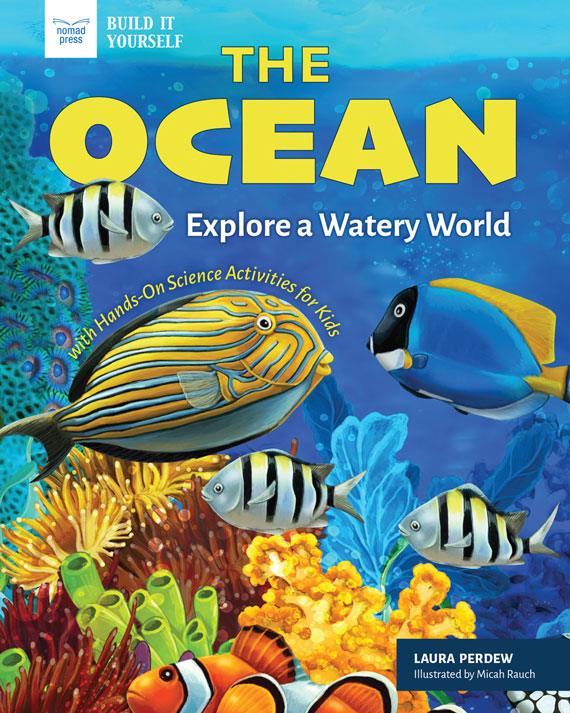
The Ocean: Explore a Watery World with Hands-On Science Activities for Kids
Related Books

The Science of Seeds
Why We Eat Maize, Wheat, Rice, and Potatoes with Hands-On Science Activities for Kids
What's on your dinner table? You probably have some form of maize, wheat, rice, and potatoes on your plate! From London to Lagos to Los Angeles, these staple foods dominate our breakfast bowls, lunch boxes, and dinner tables. In today’s world, more than half of the calories that we consume come from maize, wheat, and rice
$19.95 - $24.95
Tour the Tundra
Biome Explorers
Grab a coat to take a trip to the vast, treeless, mostly frozen tundra biome in this nonfiction picture book! In Tour the Tundra: Biome Explorers, science adventurers ages 5 to 8 visit the Arctic, the Antarctic, and alpine tundra. In these beautiful, remote places, we observe migrating animals, waddle like a penguin, and witness wildflowers
$9.95 - $19.95
Fossil Huntress
Mary Leakey, Paleontologist
Mary Leakey, Paleontologist, introduces children ages 5 to 8 to Mary Leakey, a paleontologist who lived and worked for much of her life in Africa, making discoveries that change the face of paleontology forever. Age-appropriate vocabulary, detailed illustrations, simple STEM projects such as drawing specimens, and a glossary all support foundational learning. Perfect for beginner readers or as a read
$9.95 - $16.95
Rocks and Minerals
Get the Dirt on Geology
Rocks and Minerals: Get the Dirt on Geology offers middle schoolers a chance to look under the hood of our planet and explore the forces that have shaped—and continue to shape—our world. Learn how the earth transformed from a ball of dust and gases to the planet we know today and discover how the earth
$17.95 - $22.95Reviews
Praise for Biodiversity by Laura Perdew
Booklist
Top 10 Books on the Environment & Sustainability for Youth: 2020
“Activities and accessible text bring the importance and complexity of biodiversity to upper-elementary and middle-school students.”
Praise for Extinction by Laura Perdew
National Science Teachers Association Recommends
“This book uses the concept of extinction to teach a little chemistry, a little climatology, paleontology, biology (biodiversity), ecology, and a lot of geology. The science information is historical and current, drawing on three–dimensional learning, incorporating science practices to determine what factors affect extinction in general and specifically. The integration of concepts help bring the science alive and relevant.”
Teacher Resources

Classroom Guides
For educators! Download a packet of essential questions, mentor texts, and Common Core State Standards to use in classrooms and libraries.
Classroom Guide
Collections
Looking for more? Take a look at related books in these collections!

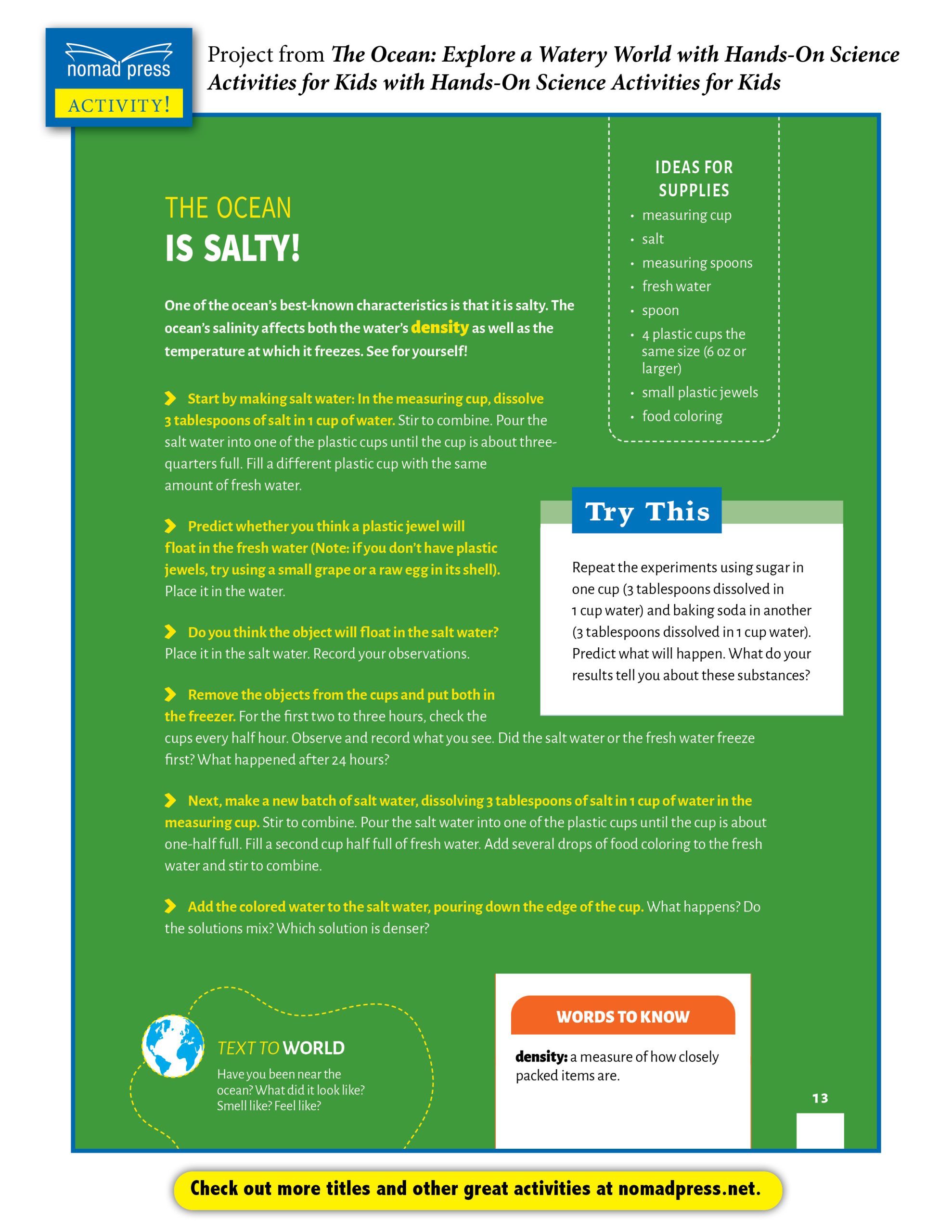
Detailed Book Description
What does the ocean do?
The mighty ocean covers 70 percent of the planet, supports more than 100,000 marine species, regulates climate, feeds billions of people, and plays a key role in the carbon cycle.
In The Ocean: Explore a Watery World with Hands-On Science Activities for Kids, young marine biologists learn the ocean’s history and the key roles it plays on Earth, including its part in the carbon cycle and in regulating weather and climate. Explore the polar oceans, intertidal zones, the shallow ocean, the deep open ocean, and the incredible biodiversity adapted to living there. Find out how people use and rely on the ocean and how humans are making a giant impact on this massive body of water.
A compelling narrative style, fun facts, glossary words defined on the page, and links to primary sources combine to take readers on an investigative journey of the ocean.
Additional materials include a glossary, a list of media for further learning, a selected bibliography, and index. All books are leveled for Guided Reading level and Lexile and align with Common Core State Standards and Next Generation Science Standards.
| Paperback, $19.95 9781647411510 |
Hardcover, $24.95 9781647411480 |
TABLE OF CONTENTS
Timeline
Introduction: Meet the World’s Oceans
Chapter 1: The Ocean in Action
Chapter 2: Polar Oceans
Chapter 3: The Intertidal Zone
Chapter 4: Shallow Oceans
Chapter 5: Open and Deep
Chapter 6: People and the Ocean
Chapter 7: Ocean Conservation
Glossary
Metric Conversions
Resources
Select Bibliography
Essential Questions
Index