

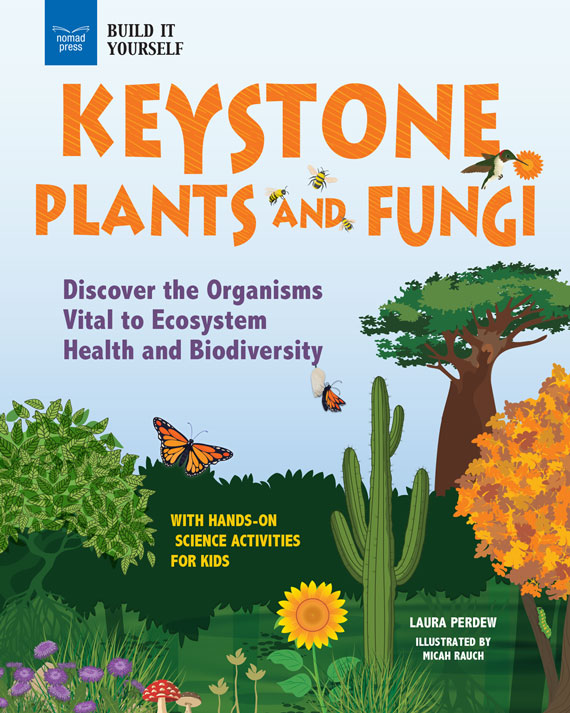
Keystone Plants and Fungi: Discover the Organisms Vital to Ecosystem Health and Biodiversity with Hands-On Science Activities for Kids
Related Books

The Science of Weather and Climate
Rain, Sleet, and the Rising Tide
In The Science of Weather and Climate: Rain, Sleet, and the Rising Tide, middle schoolers learn the science behind the weather we experience every day while examining the changing climate conditions across the entire planet. Science-minded STEM activities encourage readers to think like scientists while critical thinking exercises, essential questions, fascinating facts, links to online
$17.95 - $22.95
Zoology
Cool Women Who Work With Animals
Love to work with animals? Become a zoologist! In Zoology: Cool Women Who Work with Animals, readers ages 9 to 12 are inspired by stories of women who have made great strides in a field that requires commitment, courage, and creativity to pursue.
$9.95 - $19.95
Grassland Globetrotting
Biome Explorers
Slather on the sunscreen and get ready to journey to the desert biomes of the world in this nonfiction picture book! In Destination Desert: Biome Explorers, kid scientists make the trek to four different types of deserts around the world—a hot and dry desert, a semi-arid desert, a coastal desert, and a cold desert. In each
$9.95 - $19.95
Keystone Plants and Fungi
Discover the Organisms Vital to Ecosystem Health and Biodiversity with Hands-On Science Activities for Kids
Every species has a role to play in an ecosystem, but some roles are more significant than others. In Keystone Plants and Fungi: Discover the Organisms Vital to Ecosystem Health and Biodiversity, young botanists examine the keystone plants that make the difference between a thriving ecosystem and one in danger of collapse. Hands-on activities and critical
$19.95 - $24.95Reviews
Praise for Keystone Species by Laura Perdew
2025 Green Earth Book Award Recommended Reading
Children’s Literature
“This book is a fabulous way for children to learn about animals and develop a passion for protecting the environment.”
Praise for Biodiversity by Laura Perdew
Booklist
Top 10 Books on the Environment & Sustainability for Youth: 2020
“Activities and accessible text bring the importance and complexity of biodiversity to upper-elementary and middle-school students.”
Teacher Resources

Classroom Guides
For educators! Download a packet of essential questions, mentor texts, and Common Core State Standards to use in classrooms and libraries.
Classroom Guide
Collections
Looking for more? Take a look at related books in these collections!


Detailed Book Description
A fascinating companion book to Keystone Species!
Why are some plants and fungi more important to an ecosystem than others?
Because they’re keystone plants!
Every species has a role to play in an ecosystem, but some roles are more significant than others. In Keystone Plants and Fungi: Discover the Organisms Vital to Ecosystem Health and Biodiversity, young botanists examine the keystone plants that make the difference between a thriving ecosystem and a collapsing one. Oak trees, baobab trees, Brazil nut trees, mangroves, saguaro cacti, and certain flowers, grasses, and fungi are all considered keystone species that other species depend upon.
In the 1960s, scientists discovered that keystone species have greater influence on the biodiversity in an ecosystem than other species. They began to further investigate, and their research revealed that not only do predators play this keystone role in regulating an ecosystem, but so do ecosystem engineers, herbivores, mutualists, and foundational species. Later, the jobs that plants, fungi, and microbes do as keystone species was discovered—this groundbreaking work changed the way we understand ecosystems and food webs.
In this book, learn about keystone plants—including what happens when they disappear—and examine the ongoing threats to these species and the science-based conservation practices that are in the works to save them.
Keystone Plants and Fungi includes hands-on activities and critical thinking exercises to help all types of learners gain a deeper understanding of keystone plants’ critical roles. These activities, a narrative writing style, fun facts, words-to-know, and primary source links combine to take readers on an exploration of keystone species around the world.
Additional materials include a glossary, a list of media for further learning, a selected bibliography, and index. All books are leveled for Guided Reading level and Lexile and align with Common Core State Standards and Next Generation Science Standards.
All titles are available in paperback, hardcover, and ebook formats.
| Paperback, $19.95 9781647411602 |
Hardcover, $24.95 9781647411572 |
TABLE OF CONTENTS
Introduction: What Are Keystone Plants?
Chapter 1: Oaks
Chapter 2: Baobab Trees
Chapter 3: Brazil Nut Trees
Chapter 4: Mangroves
Chapter 6: Flowers
Chapter 7: Grasses
Chapter 8: Fungi
Chapter 9: Supporting Native Plants and Trees
Glossary
Metric Conversions
Resources
Select Bibliography
Essential Questions
Index