


Micah Rauch is a freelance graphic designer and illustrator from the beautiful state of Montana. He received a BFA in graphic design from Montana State University in Bozeman, Montana and has illustrated several books for Nomad Press, including Kitchen Chemistry, Fairground Physics, and Crazy Contraptions.
Website: micahrauch.com
Instagram: instagram.com/micahrauch
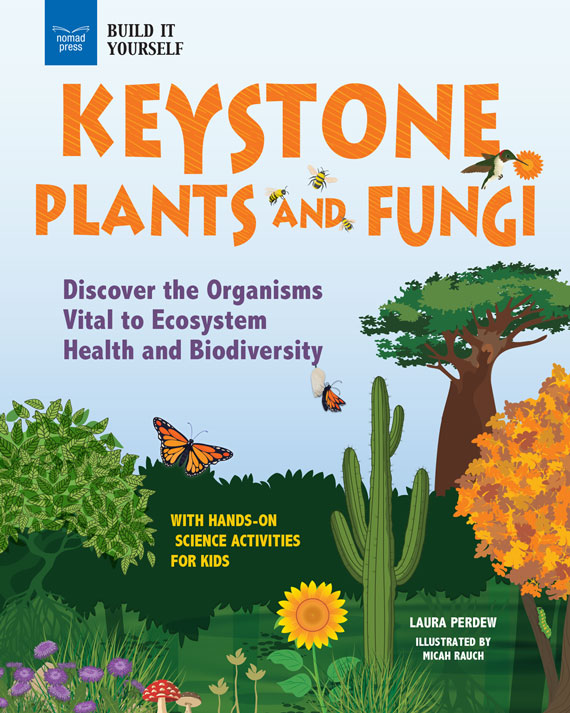
A fascinating companion book to Keystone Species! Why are some plants and fungi more important to an ecosystem than others? Because they’re keystone plants! Every species has a role to play in an ecosystem, but some roles are more significant than others. In Keystone Plants and Fungi: Discover the Organisms Vital to Ecosystem Health and Biodiversity, young botanists examine the keystone plants that make the difference between a thriving ecosystem and a collapsing one. Oak trees,...
View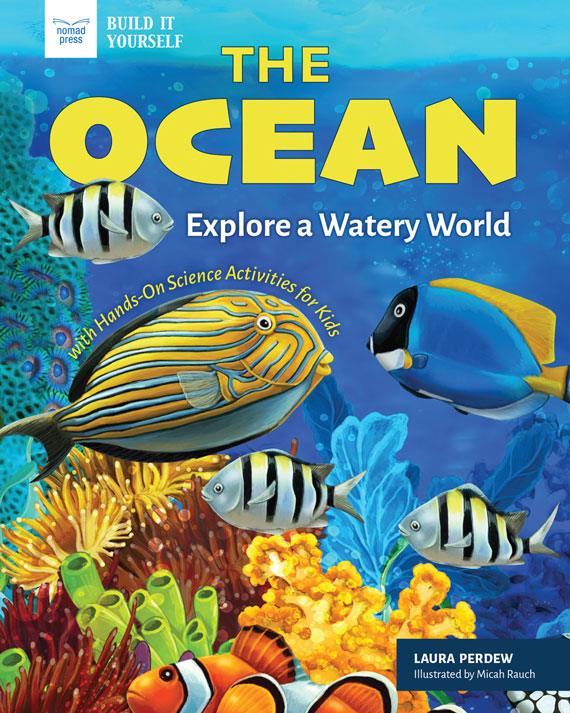
What does the ocean do? The mighty ocean covers 70 percent of the planet, supports more than 100,000 marine species, regulates climate, feeds billions of people, and plays a key role in the carbon cycle. In The Ocean: Explore a Watery World with Hands-On Science Activities for Kids, young marine biologists learn the ocean’s history and the key roles it plays on Earth, including its part in the carbon cycle and in regulating weather and...
View
How do we make contraptions that zoom, bounce, tower, and collapse? By using hands-on STEAM engineering! In Wacky Contraptions: Gadgets That Whiz, Whoosh, Whirl, and Twist with Hands-On Engineering Activities, young engineers brainstorm, design, and build devices using the engineering design process. Kids learn about simple machines, mechanical advantage, forces, energy, motion, electricity, and other physical science concepts while creating fun and fascinating prototypes that do different kinds of work. Plus, this book encourages kids to...
View
What role does sound play in your world? The Science of Sound: Pitch, Volume, Music, and Noise with Hands-On Science Activities for Kids is a symphony of learning as readers ages 8 to 11 discover how to identify the sounds around them and pinpoint how they’re formed and where they travel from. From splashy puddles to crunchy leaves to barking dogs to a strummed guitar, sound is all around us. Discover how scientists use sound...
View
Who's keeping the ecosystem healthy? In any ecosystem, every species has a role to play. From towering trees and enormous whales to the smallest microorganisms, and from plants and fungi to animals and insects, each species is important to the overall health of the ecosystem. But some of those species play such vital roles that without them, the ecosystem is in danger of collapsing. These are called keystone species. In Keystone Species: Meet the Animals...
View
What's on your dinner table? You probably have some form of maize, wheat, rice, and potatoes on your plate! From London to Lagos to Los Angeles, these staple foods dominate our breakfast bowls, lunch boxes, and dinner tables. In today’s world, more than half of the calories that we consume come from maize, wheat, and rice alone. How did this happen? In The Science of Seeds: Why We Eat Maize, Wheat, Rice, and Potatoes with...
View
How do we heat our homes, light our rooms, and power our cars? With energy! And the type of energy we use matters to our health and the health of the planet. In Renewable Energy: Power the World with Sustainable Fuel, scientists ages 9 to 12 learn how switching from nonrenewable energy sources to renewable ones can help make our homes, businesses, cities, and world better, healthier places. What are those renewable resources? Solar, wind,...
View
If you were designing a wheelbarrow, how would you make it move easily when you pushed it? Skis? Stilts? Springs? How about wheels? The wheel is a simple machine that has been used for centuries to make work easier for humans. Look at all the cars, trucks, trains, buses, and bikes around you. They all have wheels and axles! In Wheels Make the World Go Round: Simple Machines for Kids, readers ages 5 to 8...
View
How do you keep a truck from rolling? A door from closing? And how do you cut through banana bread? All of these questions have the same answer—a wedge! Wedges are one of the simple machines that help make work easier by using mechanical advantage. In Wedges Make a Point: Simple Machines for Kids, readers ages 5 to 8 learn how a wedge’s shape makes it perfect at stopping something heavy from moving, and separating...
View
Have you ever played on a seesaw? You were using a lever! A lever is one of six simple machines that are designed to make different kinds of work easier. Lifting, pulling, pushing—all these tasks are more efficient when you use a simple machine. In Levers Lessen the Load: Simple Machines for Kids, readers ages 5 to 8 learn how levers and fulcrums can help us move far more weight than we can on our...
View
How does a dump truck dump all the dirt out of its truck bed? It turns that bed into a ramp! A ramp is another word for an inclined plane, and inclined plane is one of six simple machines that are designed to make different kinds of work easier. Lifting, pulling, pushing—all these tasks are more efficient when you use a simple machine. In Inclined Planes Ramp It Up: Simple Machines for Kids, readers ages...
View
Build your treehouse with screws! Screws are one of the simple machines that are designed to make different kinds of work easier! Lifting, pulling, pushing, and fastening things together—all these tasks are more efficient when you use a simple machine. In Screws Keep Things Secure: Simple Machines for Kids, readers ages 5 to 8 learn how a screws shape can pull things together or push things apart or even move heavy objects from one place...
View
What if an elephant sat on your book and refused to move? How could you lift it? Very carefully! You might want to use a pulley. A pulley is one of six simple machines that are designed to make different kinds of work such as lifting, pulling, pushing easier. In Pulleys Pull Their Weight: Simple Machines for Kids, readers solve the problem of a heavy elephant by learning about forces and how we can increase...
View
What’s up? What’s down? What’s keeping you steady? In Gravity: Mass, Energy, and the Force that Holds Things Together with Hands-On Science Activities scientists ages 8 to 12 explore the invisible but powerful force that is responsible for keeping the entire universe in place—including you! Gravity is the natural phenomenon that makes everything in the universe attracted to everything else. On Earth, that means gravity is why we fall down toward the ground, the reason...
View
It’s everywhere. In our homes, schools, offices, on the train, in our cars—even inside our bodies! Electricity: Circuits, Static, and Electromagnets with Hands-On Science Activities explores the science of electricity and the technology we’ve developed to harness the energy to power our lives. By diving into the topics of static electricity, currents, circuits, electromagnetism, motors, and ways we might produce and use electricity in the future, kids ages 8 to 12 gain a full view...
View
How does a country rebuild the infrastructure, government, and economy of a huge region while taking steps to resolve the status of 4 million newly freed people? In Reconstruction: The Rebuilding of the United States After the Civil War, middle schoolers examine the era from 1865 to 1877, a time when the United States wrestled with questions that still plague the country today. Who should get access to citizenship and voting rights? How should the...
View
You might think people study chemistry only in laboratories or classrooms—but, actually, chemistry is everywhere! We observe chemical reactions every day. Have you ever watched fireworks? That’s a chemical reaction. Have you ever found sour milk in your refrigerator? Another chemical reaction! There’s even chemistry happening inside your own body as you break down the food you eat into usable nutrients. In Chemical Reactions! With 25 Science Projects for Kids, readers ages 7 to 10...
View
Welcome to the Renaissance, a time of discovery, wonder, and exploration! During the Renaissance, inventors and other creative thinkers designed and constructed many new things. And one of the people on the forefront of that awakening was Leonardo da Vinci. In The Science and Technology of Leonardo da Vinci, readers ages 9 through 12 explore the life of one of the world’s most amazing minds. They ponder the same kinds of questions that drove Leonardo...
View
Inventor. Scientist. Diplomat. Printer. Benjamin Franklin was a very curious person, which led to lots of different roles during his lifetime. In The Science and Technology of Ben Franklin, readers ages 9 through 12 explore the life of one of Colonial America’s most fascinating citizens. They discover what it might have been like to be a young person during the eighteenth century, when work and entertainment looked much different from today. Kids confront the same...
View
World War I sustained these staggering casualties: 9 million dead soldiers, 12 million or more civilian lives lost, millions more wounded. But those numbers only hint at the devastation, both political and personal, that lies at the heart of the Great War. World War I: The Great War to End All Wars brings to light the key details of this critical juncture in history, which marks the transition to a modern era in which mass destruction...
View
A new edition offers more science fun with updated activities and links to great chemistry videos! In Kitchen Chemistry: Cool Crystals, Rockin’ Reactions, and Magical Mixtures with Hands-On Science Activities, readers ages 9 to 12 discover that the cooking, mixing, and measuring you do in the kitchen all has its roots deep in science—chemistry to be exact! Starting with an exploration of atoms and molecules and how they make up the world, Kitchen Chemistry goes on to...
View
Where can you experience the laws of motion, the fun of physics, and the chemistry of cotton candy? The fair! In Fairground Physics: Motion, Momentum, and Magnets with Hands-On Science Activities, readers ages 9 to 12 learn about the forces that rule our world and everything in it by examining the rides, games, and even food you might find at a county fair. Ride the carousel and discover centripetal force. Listen to the music and learn...
View
Why use a simple hand motion to wipe your mouth when you can build a machine to do it for you? Toppling dominoes, rolling marbles, racing balloon cars, springing catapults, and whizzing zip-lines are all elements used to build Rube Goldberg machines in Crazy Contraptions: Build Rube Goldberg Machines that Swoop, Spin, Stack, and Swivel with Hands-On Engineering Activities. The book introduces kids ages 9-12 (and beyond!) to the wacky machines designed by Goldberg, which...
View